Short answer: for most GTA homes, asphalt gives the best balance of cost, winter performance and ease of repair. Concrete lasts a long time and looks clean but is sensitive to road salt and hard to patch. Interlocking pavers look the most upscale and can be lifted and reset, but cost the most and need weed and sand maintenance. The right choice depends on your budget, how long you plan to stay, and how much upkeep you want.
Side-by-side comparison for Ontario conditions
| Asphalt | Concrete | Interlock | |
|---|---|---|---|
| Install cost | Lowest of the three | Higher | Highest |
| Typical lifespan | 15–25 years with a good base | Can exceed 25 years if it avoids salt damage | Long, since individual pavers can be replaced |
| Freeze-thaw | Flexes; cracks are easy to seal | Rigid; can crack and scale | Joints allow movement; can heave if base is poor |
| Road salt | Tolerates it well | Prone to surface scaling, especially in early years | Pavers tolerate it; can stain |
| Repairs | Simple patching | Patches show; slabs often replaced | Lift and reset pavers |
| Snow melt in sun | Dark surface warms faster | Lighter, stays colder | Varies by colour |
| Upkeep | Crack sealing; sealcoat every few years | Seal against salt; joint care | Polymeric sand top-ups; weed control |
| Ready to drive on | Cars after 24–48 hours | About a week or more | Usually right away |
Asphalt driveways: pros and cons
Why GTA homeowners choose it: lower upfront cost, a quick install (most residential jobs take a day or two), flexibility through freeze-thaw, and a dark surface that helps snow and ice clear in sunlight. Repairs blend in well. The trade-offs: it softens on very hot days, it needs crack sealing and periodic sealcoating, and it has a more uniform look than stone. Our older post on the pros and cons of asphalt driveway paving goes deeper, and how long an asphalt driveway lasts covers lifespan.
Concrete driveways: pros and cons
Strengths: very durable when properly reinforced and cured, a bright clean finish, and options like broom, exposed aggregate or stamped finishes. Heated concrete driveways, with in-slab heating, are an option where snow removal is a real concern. Weaknesses: higher cost, longer curing before you can park on it, and vulnerability to scaling from de-icing salt. Cracks in concrete are harder to hide. AMPAC also installs concrete driveways and garage floors.
Interlocking stone driveways: pros and cons
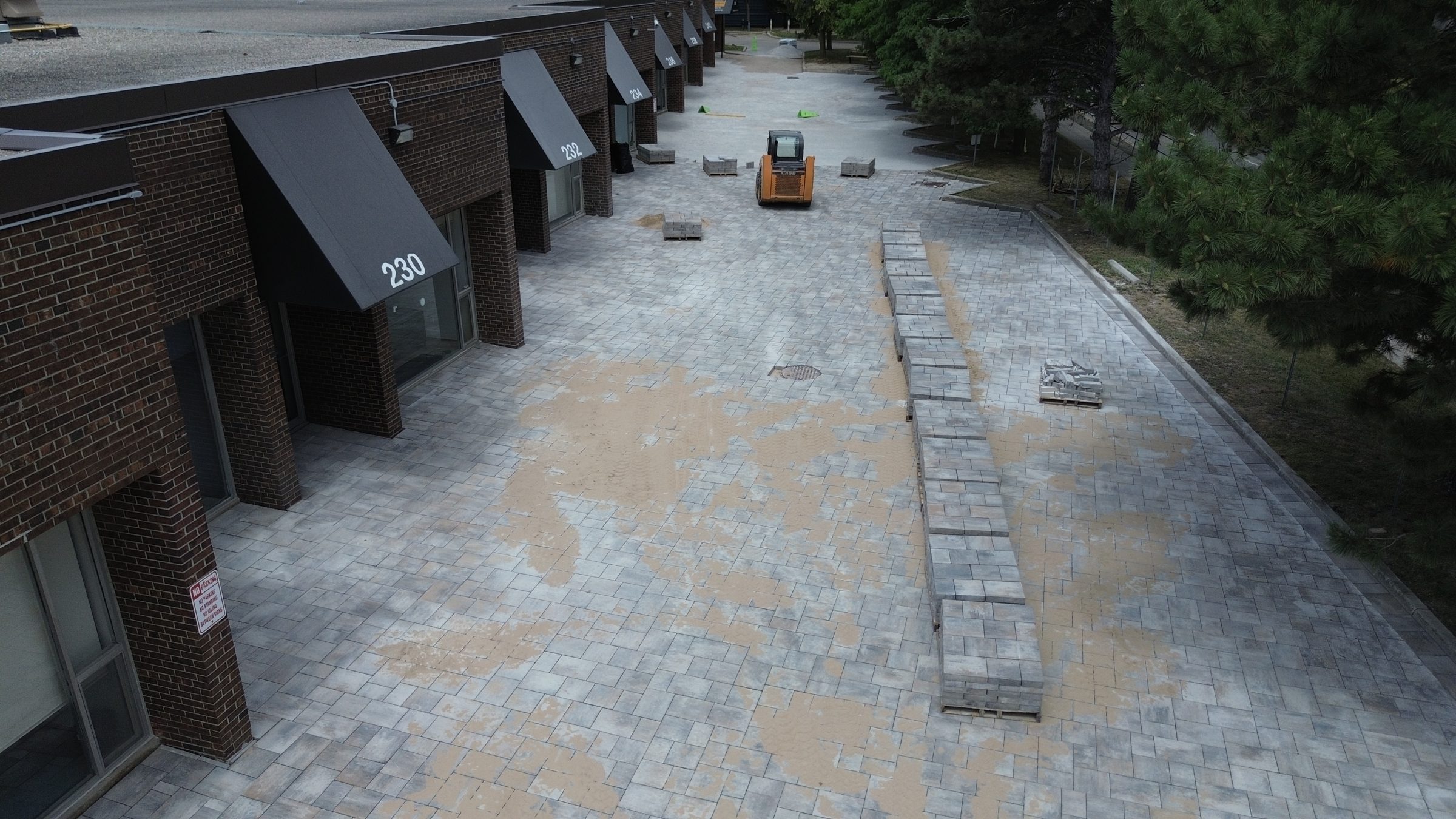
Strengths: the most design choice, strong curb appeal, and individual pavers can be lifted for repairs or utility work and reset. Weaknesses: the highest upfront cost, joint sand that needs topping up, weeds and ants in joints, and possible heaving if the base was rushed. Read asphalt and interlock driveway options or see our interlocking services.
Can you combine them?
Yes, and many homes in Vaughan, Woodbridge and King City do. A popular approach is an asphalt field with an interlock border or apron. You get asphalt’s price and winter performance with the finished look of stone at the edges, and the border helps support the asphalt edge so it doesn’t crumble.
Which is best for your property?
- Best value and easiest winters: asphalt.
- Longest-lasting hard surface, with salt precautions: concrete.
- Most curb appeal and design control: interlock.
- Steep or long driveways: asphalt or heated concrete, depending on budget.
- Selling within a few years: asphalt with a border offers a clean refresh without the biggest spend.
Whatever the surface, the base underneath decides how it performs. That is why we always start with excavation and drainage. For what drives the cost of the asphalt option, see how much an asphalt driveway costs in the GTA.
Frequently asked questions
What is the best driveway material for Canadian winters?
For most GTA homes asphalt is the most practical. It flexes with freeze-thaw, tolerates road salt, melts snow faster in sun, and is easy to repair. Concrete and interlock can perform well but need more care against salt and heaving.
Is asphalt or concrete cheaper in Ontario?
Asphalt is generally cheaper to install than concrete, and interlock is usually the most expensive of the three. Exact pricing depends on base work, size and access.
Does road salt damage concrete driveways?
Salt can cause surface scaling on concrete, especially in the first winters after installation. Sealing concrete and using gentler de-icers helps.
Can I put interlock around an asphalt driveway?
Yes. An interlock border or apron is a common upgrade. It improves the look and helps support the asphalt edge.
Which driveway adds the most home value?
Interlock and decorative concrete usually have the strongest visual impact, but a fresh, well-built asphalt driveway with clean edges also lifts curb appeal at a lower cost.
Related reading
- How much does an asphalt driveway cost in the GTA?
- How long does an asphalt driveway last in Ontario?
- Does road salt damage asphalt?
- Asphalt and interlock paving stone driveway options
- How to melt ice without concrete damage
Get a written quote from AMPAC
Weighing asphalt against concrete or interlock? AMPAC Paving & Concrete has paved driveways, parking lots and commercial sites across the GTA for more than 25 years with our own crews and equipment. We are fully insured, WSIB-covered, and every quote is written and itemized. Book a free site visit or call 416-802-1632.