Parking lot paving & resurfacing
Retail plazas, condominium lots, industrial yards, office complexes and institutional sites. Built for loaded trucks, phased so the property keeps operating, documented so you can hand the quote to an owner or a board.
A lot fails at the drains and the drive aisles
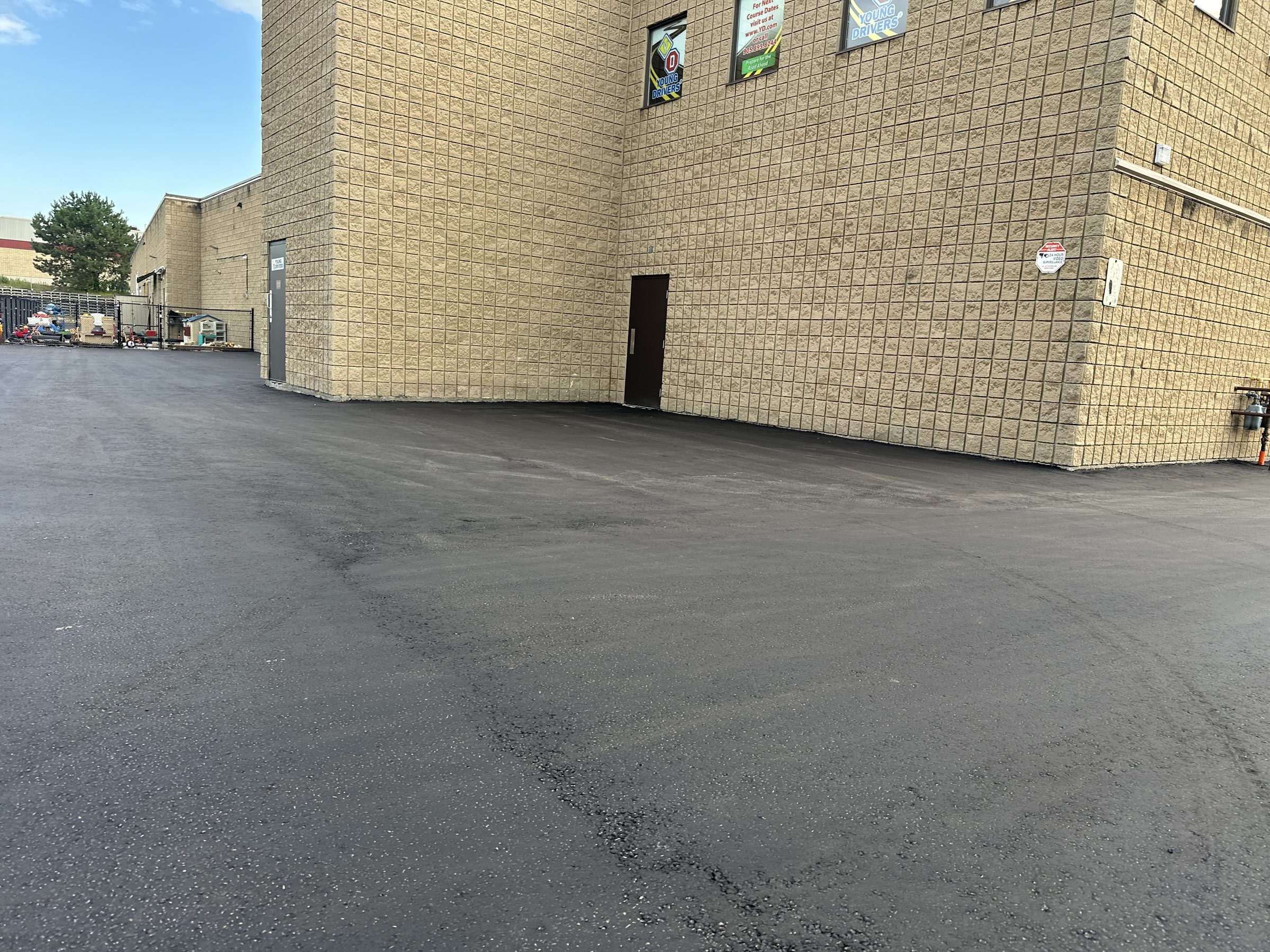
Parking lots do not wear evenly. The stalls can be sound while the drive aisles, the approach and the area around every catch basin have already gone. Pricing a whole lot as one surface either wastes your money or hides the failures — so we survey it in zones and quote it that way.
Where the base is intact, milling and overlaying the aisles buys years for a fraction of a rebuild. Where trucks turn under load, or water has been sitting, the section usually needs full-depth reconstruction, and we will show you the core rather than ask you to take our word for it.
Scheduling is the other half. We phase by section, work nights and weekends where the tenants require it, and publish the sequence before we mobilize.
What's included
How the job runs, step by step
Zone survey
We divide the lot into stalls, drive aisles, approach and drainage areas, and grade the condition of each separately.
Zoned quote
Overlay where the base is sound, reconstruction where it is not, priced as separate lines so you can stage the work.
Phasing plan
Sequence built around your peak hours, deliveries, garbage pickup and fire routes, issued in writing before mobilization.
Mill, base & pave
Section by section: milling and base one day, paving and cooling the next, with each phase back in service in 24 to 48 hours.
Reinstate & maintain
Surface reinstated, and a crack-sealing and sealcoating cycle set so the lot does not get back to where it started.
Why lots fail where they fail
Drive aisles go first
Turning and braking loads concentrate in the aisles. Stalls can look fine while the aisles are structurally done.
Around the catch basins
Water pools at every drain that has settled, and the asphalt around it fails outward. Rebuilding the basin surround is often the whole fix.
Truck aprons and dock approaches
Loaded trailers rut thin asphalt. These areas usually need extra depth, or concrete instead.
Standing water anywhere
Any pond after rain is a grade problem, and it will keep destroying whatever surface you put over it.
Thin overlays over failed base
The cheapest bid on a failed lot. The old cracks come through the new mat within two seasons.
Deferred crack sealing
Sealing costs a fraction of patching, and patching costs a fraction of reconstruction. Deferral is the most expensive choice.
Parking lot questions
Do we have to close the whole lot?
No. A phased lot is never fully closed. Each section is typically out of service for 24 to 48 hours — one day for milling and base, one for paving and cooling — and we sequence the phases around your peak hours.
How thick should a commercial lot be?
It depends entirely on the traffic. A car-only visitor lot needs far less than a yard that takes loaded 53-foot trailers, where two lifts over a deep granular base is normal. We spec thickness from your actual traffic, and it appears in writing on the quote.
Can you work around our tenants and deliveries?
Yes — that is most of what commercial scheduling is. We map loading docks, garbage pickup, fire routes and peak hours before the sequence is set, and we give tenants written notice dates they can plan around.
Parking Lot Paving across 26 GTA cities
Book a free site visit
We measure, probe the base and check drainage, then send an itemized written quote within 48 hours. No obligation and no sales pitch.