Short answer: yes, you can often pave over an existing asphalt driveway. An overlay (also called resurfacing) works when the base underneath is still solid, the surface damage is mostly cosmetic, and there is room to raise the height without burying the garage slab or blocking drainage. If the old driveway has alligator cracking, sinking, heaving or standing water, an overlay will crack along the same lines within a season or two, and full replacement is the better value.
What is the difference between resurfacing and replacing?
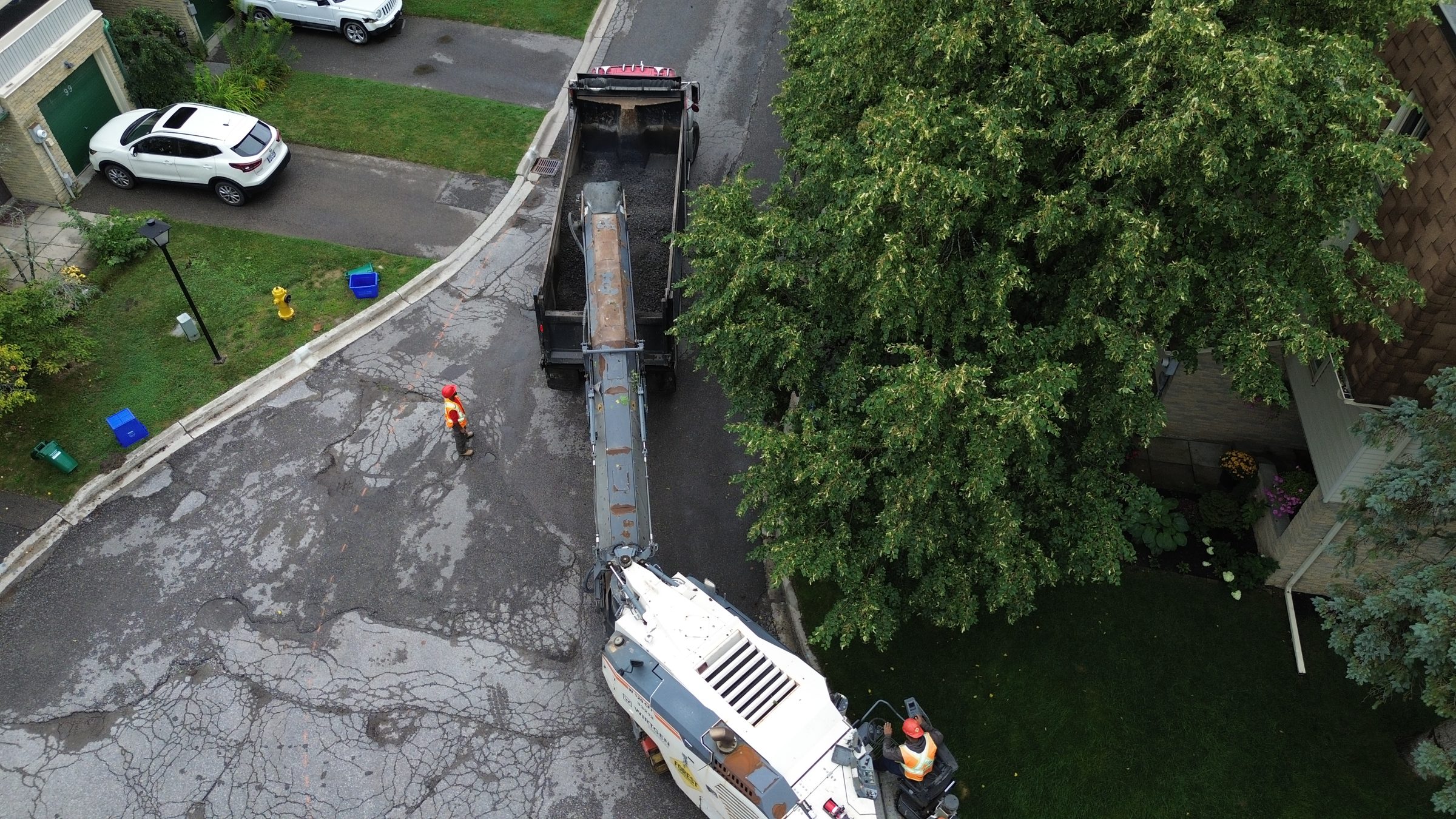
- Resurfacing / overlay: the old surface is cleaned, repaired where needed, sometimes milled down, then covered with a new layer of hot asphalt. The existing base stays.
- Full replacement: the old asphalt is removed, the base is excavated, regraded and rebuilt with compacted granular, then new asphalt goes down.
- Repair only: crack sealing, patching and sealcoating to buy time when the driveway is mostly sound.
When an overlay makes sense
- The surface is faded, rough or has fine cracks, but no spider-web cracking.
- No sinking, ruts or soft spots when you drive on it.
- Water drains off properly, with no ponding.
- The new height won’t create a lip at the garage, catch the bottom of the garage door, or push water toward the house.
- The driveway has only been overlaid once before, or never.
When you should replace instead
- Alligator cracking across large areas. It is a sign the base has failed. See how to repair alligator cracking.
- Potholes that keep coming back after patching.
- Sinking, heaving or ruts, often from a thin base or clay subsoil.
- Drainage problems such as water pooling against the garage or foundation.
- Too many layers already. Every overlay raises the surface. On older streets in Toronto, East York and North York, driveways sometimes sit several inches above the original grade.
- You want to change the layout by widening, adding borders or regrading.
The “reflective cracking” problem
New asphalt over old cracks doesn’t stop the movement that caused them. The cracks in the old layer work their way up through the new one, a process called reflective cracking. Good contractors reduce it by milling, cutting out and patching failed sections, and sealing cracks before the overlay. When the cracks are structural, though, no preparation will stop them. That is why we probe the base before recommending an overlay.
Can you pave asphalt over concrete or interlock?
Over a sound concrete driveway, it is possible, but joints and cracks in the concrete usually reflect through within a few years. Over interlock, it is almost never a good idea, because the pavers shift independently. In most cases we recommend removing the old surface. Our asphalt vs concrete vs interlock comparison can help if you are deciding on a new surface.
How much does resurfacing save?
An overlay is usually cheaper than replacement because there is little removal and no base rebuild. The savings only hold if the overlay lasts. If the base is failing, you will pay for the overlay and then pay again for replacement. For a breakdown of what moves the price, see what sets the price of an asphalt driveway in the GTA.
How long does an overlay last?
On a sound base with good preparation, an overlay can give many more years of service. On a weak base it may last only a couple of seasons. A full replacement with a properly built base commonly lasts 15 to 25 years, as covered in how long an asphalt driveway lasts in Ontario.
What about thickness?
Overlays are usually thinner than a new driveway, but too thin and the new layer won’t compact or bond well. We explain typical depths in how thick asphalt should be.
Quick decision checklist
| Question | If yes |
|---|---|
| Spider-web cracking over large areas? | Replace |
| Sinking, ruts or soft spots? | Replace |
| Water pooling or flowing toward the house? | Replace and regrade |
| Only fading and fine cracks? | Overlay or seal |
| Driveway already sits high at the garage? | Mill or replace |
Frequently asked questions
Can you put new asphalt over old asphalt?
Yes, when the base is sound, damage is mostly on the surface, and raising the height won’t cause problems at the garage or with drainage. Otherwise, replacement is the better option.
Is resurfacing a driveway worth it?
It is worth it when the structure underneath is still good. Over a failing base, an overlay often cracks again within a couple of seasons.
What is reflective cracking?
It is when cracks in the old surface work their way up through a new overlay. Milling, patching and crack sealing beforehand reduce it, but structural cracks will come back.
Can you pave asphalt over a concrete driveway?
It is possible over sound concrete, but the concrete joints usually reflect through. In most cases removing the concrete gives a longer-lasting result.
How do I know if my driveway base has failed?
Widespread alligator cracking, recurring potholes, sinking, ruts and standing water are the usual signs. A contractor should probe the base before recommending an overlay.
Related reading
- How long does an asphalt driveway last in Ontario?
- How much does an asphalt driveway cost in the GTA?
- Should you seal a new asphalt driveway?
- How to repair alligator cracking in asphalt
- Driveway construction: your planning guide
See our residential paving and asphalt repair and sealcoating services.
Get a written quote from AMPAC
Not sure whether to overlay or replace? AMPAC Paving & Concrete has paved driveways, parking lots and commercial sites across the GTA for more than 25 years with our own crews and equipment. We are fully insured, WSIB-covered, and every quote is written and itemized. Book a free site visit or call 416-802-1632.