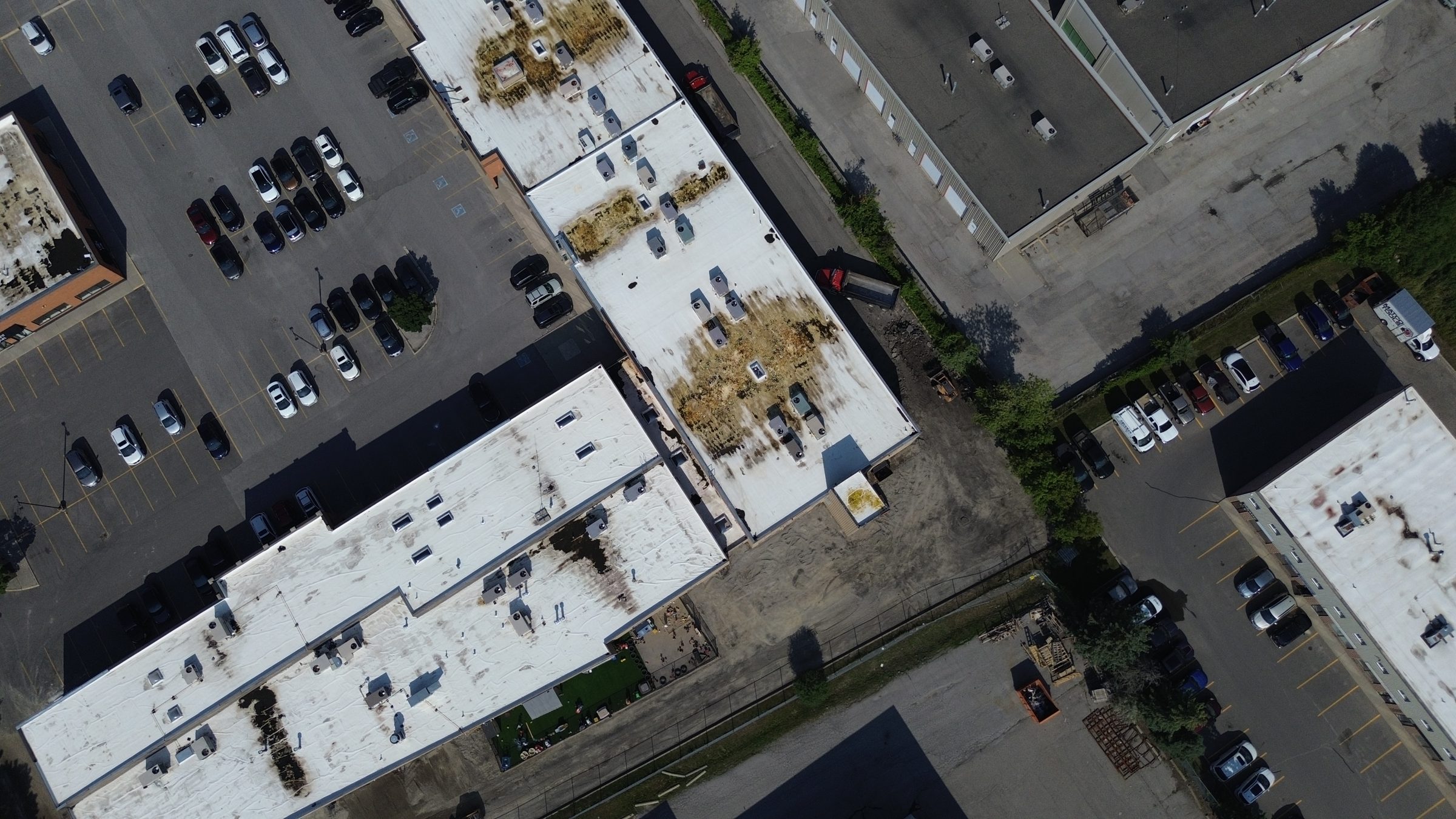
Short answer: industrial asphalt paving is built for weight, not looks. Truck yards, loading docks, distribution centres and equipment storage areas carry loads many times heavier than a passenger car, often turning on the spot or parked for hours. A durable industrial surface needs a properly designed pavement section (deeper base, thicker asphalt laid in multiple lifts), drainage that keeps water out of the structure, and in some spots concrete instead of asphalt. Done right, it keeps operations moving. Done cheaply, it ruts and potholes within a few seasons.
What counts as industrial paving?
- Truck courts and trailer parking at warehouses and distribution centres
- Loading dock approaches and aprons
- Equipment and fleet yards for contractors, municipalities and transport companies
- Access roads within industrial properties
- Outdoor storage and lay-down areas
Across the GTA, much of this work sits in industrial areas in Vaughan, Brampton, Mississauga, Bolton and Markham. For customer-facing lots, see commercial parking lot paving.
Why industrial pavement fails
Load and repetition
One loaded tractor-trailer does far more damage to pavement than one car. Hundreds of truck movements a week break down a section designed for cars very quickly. The usual results are ruts in wheel paths, alligator cracking and potholes.
Turning and standing loads
Trucks turning tightly while stationary, and trailers parked on landing gear, concentrate weight on small areas. On hot days asphalt softens and dents. This is why dock aprons and trailer parking zones are often concrete. Our post on how heat affects asphalt explains the softening effect.
Water
Water in the base, from poor slopes, blocked catch basins or cracks left open, weakens the structure fast. Combine water with heavy loads and freeze-thaw and you have the most common cause of industrial pavement failure. See three causes of parking lot breakdowns.
How a heavy-duty asphalt section is built
- Site and soil assessment. Large or new industrial sites usually involve a geotechnical review and an engineered design. On repaving work, we probe and core existing areas to see what is underneath.
- Locates and permits. Utility locates are required before any excavation in Ontario. New sites or entrance changes may require municipal approvals.
- Excavation and subgrade preparation. Soft or wet material is removed and the subgrade compacted. Our excavation and grading crews handle this.
- Granular base. Compacted Granular B and/or Granular A in layers, to the design depth.
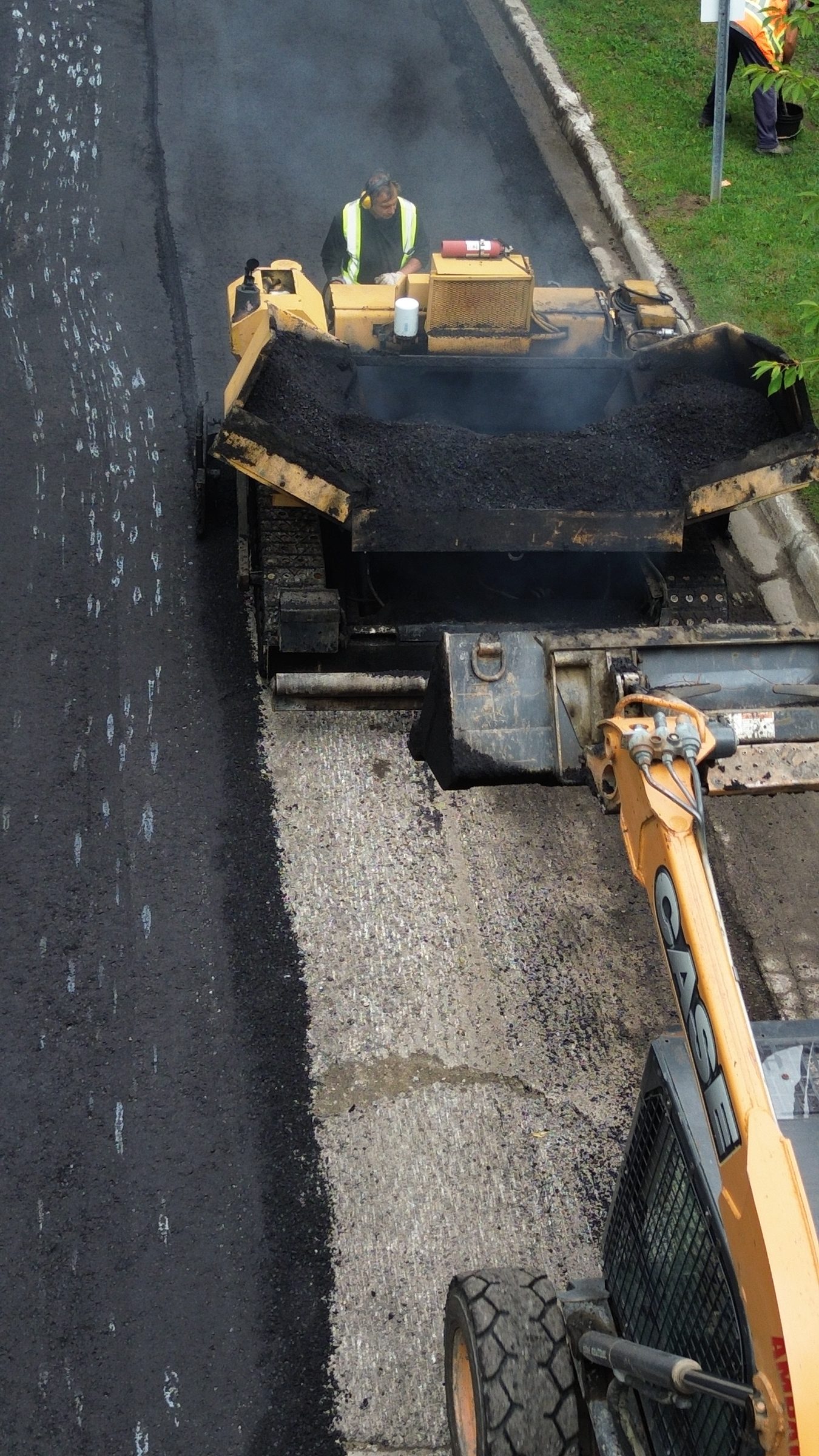
- Asphalt in multiple lifts. A coarse binder course (commonly HL8 or a heavy-duty equivalent) and a surface course, each compacted separately. Truck lanes and turning areas typically get the heaviest section.
- Drainage. Slopes, catch basins and outlets designed so water leaves the pavement quickly.
- Markings. Truck lanes, trailer stalls, fire routes and pedestrian paths.
For more on mix types and depths, see how thick asphalt should be.
Asphalt or concrete for industrial sites?
| Area | Usual choice | Why |
|---|---|---|
| Truck courts and drive lanes | Heavy-duty asphalt | Lower cost over large areas, fast to install and repair |
| Dock aprons | Concrete | Resists braking, turning and standing loads |
| Trailer landing-gear strips | Concrete | Prevents point-load punctures |
| Employee and visitor parking | Standard commercial asphalt | Car traffic only |
AMPAC handles both. See our concrete services.
Keeping operations running during paving
Industrial sites can’t shut down for a week. We phase work by zone, keep at least one truck route and the fire route open, coordinate with shipping schedules, and work evenings or weekends where it makes sense. A clear schedule shared with your logistics team ahead of time avoids most disruption.
Maintaining an industrial yard
- Seal cracks every year, before winter
- Repair potholes with proper cut-and-patch, not throw-and-go cold patch
- Keep catch basins clear
- Watch dock aprons and turning areas for early rutting
- Repaint markings as they fade
The full checklist is in parking lot maintenance before winter, and why pothole repair matters covers repair methods.
Frequently asked questions
What is industrial asphalt paving?
Paving designed for heavy vehicles such as tractor-trailers, fleet vehicles and equipment, using a deeper base and thicker asphalt laid in multiple lifts, with drainage designed to protect the structure.
How thick should asphalt be for truck traffic?
It depends on traffic volume, vehicle weights and soil, and is normally set by an engineered design. Heavy-duty sections are thicker than commercial parking lots and are placed in at least two lifts.
Should loading docks be asphalt or concrete?
Dock aprons and trailer parking strips are usually concrete because they resist standing and turning loads. Drive lanes and truck courts are commonly asphalt.
Can you pave an industrial yard without shutting down?
Yes. Work is phased by zone, with truck and fire routes kept open, and can be scheduled for evenings or weekends.
Why does my truck yard keep getting potholes?
Usually a combination of heavy loads, water in the base and a pavement section that is too thin for the traffic. Patching treats the symptom; fixing drainage and the section fixes the cause.
Related reading
- Commercial parking lot paving in the GTA
- How thick should asphalt be?
- Parking lot maintenance before winter
- Everything you wanted to know about commercial paving
- The importance of pothole repair
Industrial and commercial asphalt paving in Vaughan, Brampton, Mississauga, Bolton and Markham.
Get a written quote from AMPAC
Running a yard that keeps breaking up? AMPAC Paving & Concrete has paved driveways, parking lots and commercial sites across the GTA for more than 25 years with our own crews and equipment. We are fully insured, WSIB-covered, and every quote is written and itemized. Book a free site visit or call 416-802-1632.