Golf cart pathway paving
Cart paths for golf courses, country clubs, resorts and private estates across the GTA. Built on a proper base, graded to shed water, and finished with supported edges so the path holds up to daily carts and maintenance equipment.
Built for carts, mowers and spring melt
A cart path looks simple, but it takes a steady stream of narrow wheel loads every day, plus utility vehicles and mowers that weigh more than they look. Most failures start at the edges, where wheels run off the asphalt and break the side away, and in low spots where water sits.
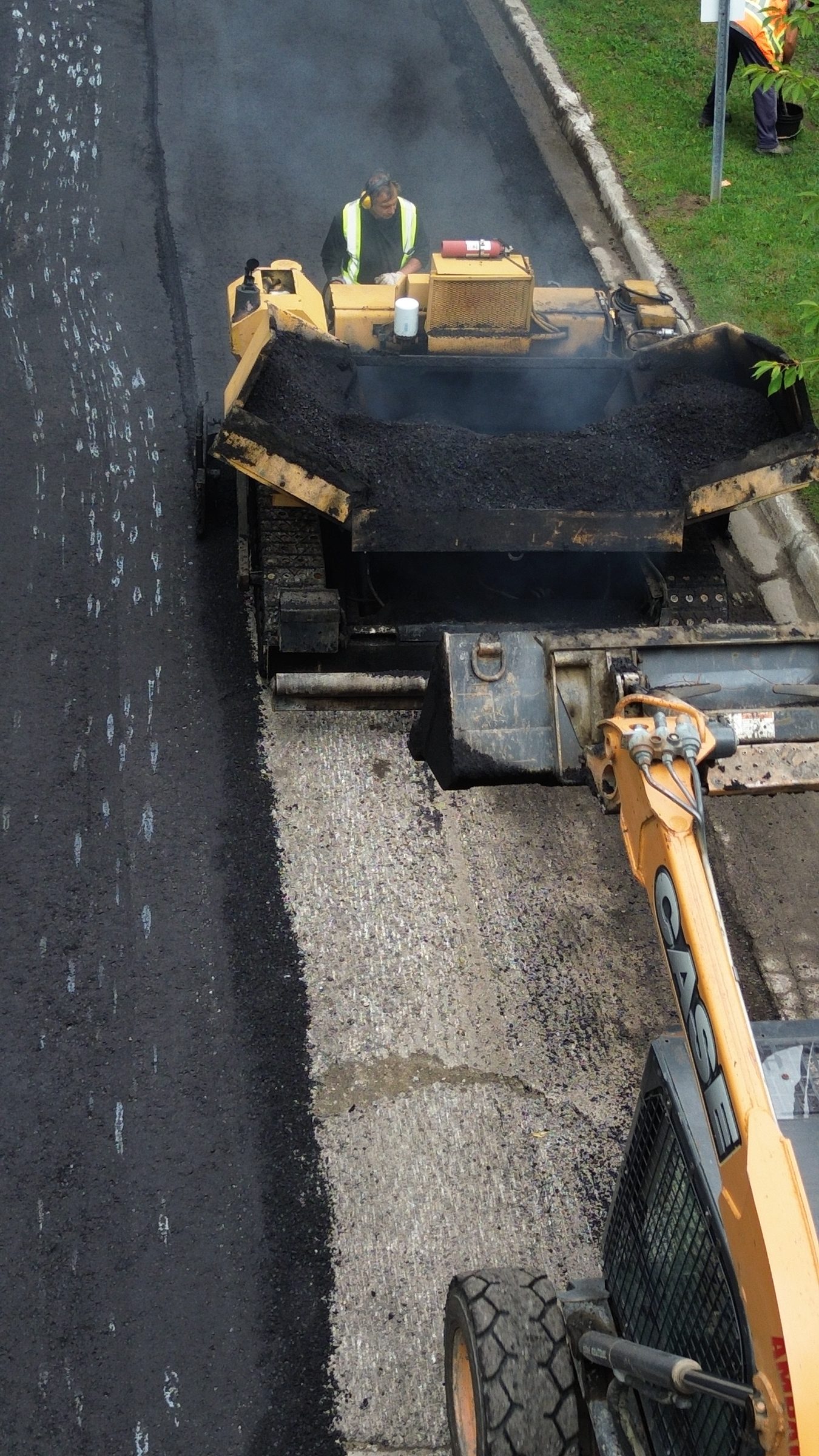
We build cart paths the same way we build a driveway: soft material out, compacted granular in, then hot-mix asphalt laid and rolled. Edges are supported so they do not crumble, and the grade is set so water crosses or leaves the path instead of running down it and washing out the sides.
Work is scheduled around play. We pave in sections, early in the day or in the shoulder seasons, and keep carts routed around active areas so the course stays open.
What's included
How the job runs, step by step
Walk the route
We walk the paths, check slopes, low spots and edges, and note where water crosses.
Written quote
Section by section, with base depth and asphalt thickness in writing.
Base & drainage
Soft material removed, granular compacted, low spots and crossings graded.
Pave & finish
Hot mix laid and rolled, edges supported, turf edges tidied before we leave.
What fails on cart paths
Broken edges
Wheels running off the side break the asphalt away. Supported edges and the right path width prevent it.
Low spots and ponding
Water sitting on the path softens the base. Regrading and drainage crossings fix the cause.
Root heave
Tree roots lift and crack the path. The section is cut out, roots dealt with, and the base rebuilt.
Cracking across the path
Usually frost movement over a thin base. Isolated cracks can be sealed; widespread cracking needs a rebuild.
Cart path questions
Can you pave our cart paths while the course is open?
Usually, yes. We work in sections, early in the day or around tee times, and route carts around the active area. New asphalt can take carts once it has cooled; heavier maintenance equipment should wait a few days.
Asphalt or concrete for golf cart paths?
Asphalt usually costs less to install over long distances and is easier to repair in sections. Concrete is very durable but costs more and patches show. We can price both so you can compare.
Can you repair existing cart paths instead of replacing them?
Often. If the base is sound, failed sections can be cut out and patched, or the path milled and overlaid. If the edges have broken away along long stretches, rebuilding those sections is usually better value.
Golf Cart Pathway Paving across 26 GTA cities
Book a free site visit
We measure, probe the base and check drainage, then send an itemized written quote within 48 hours. No obligation and no sales pitch.